
 Gaming Tables
 Bar
Bar Bestsellers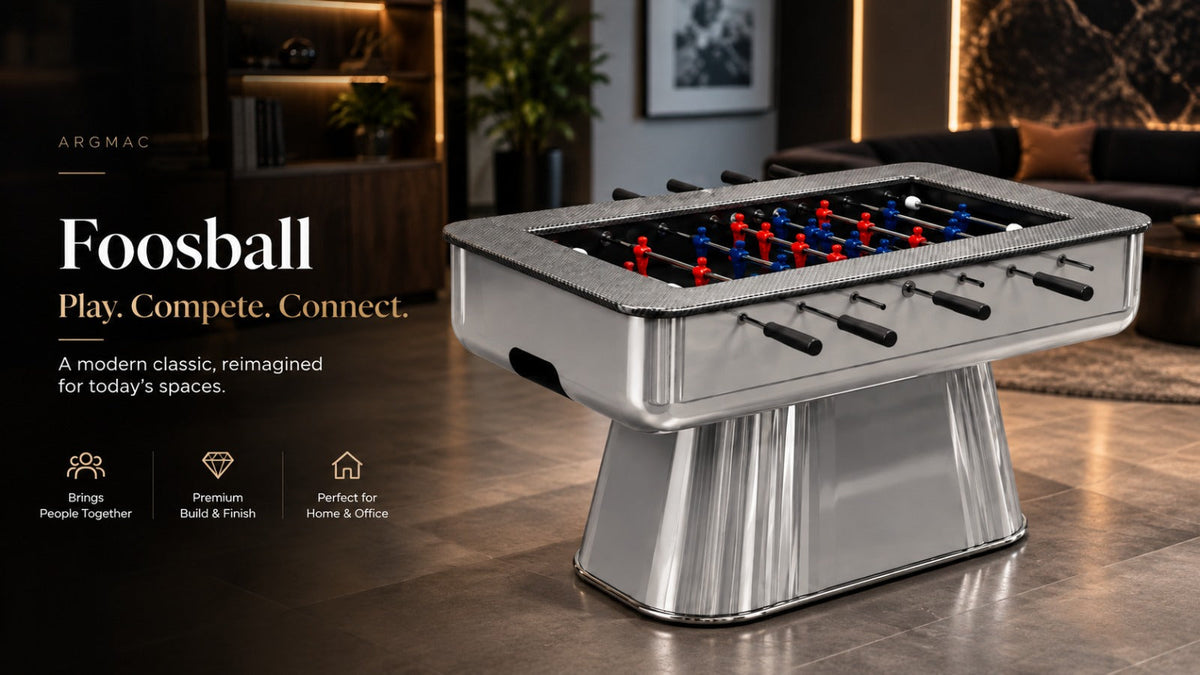
Why a Foosball Table Remains One of the Most Popular Table Games
Introduction to Foosball
Are you outfitting a space like a game room, family hangout, or office break zone? A foosball table steps right into the spotlight. Called table football in many places, even soccer table sometimes, it pulls folks together—it has done so for decades. Speed meets rivalry here; split-second moves matter just as much as clever planning. Think generations bonding over spinning rods and scoring goals—it sticks around because it works. The soccer table covers what actually matters when picking one out: where it came from, why prices swing, which details make a difference, and upkeep tips that help it last.
History of Foosball and Table Soccer
Foosball and table soccer’s roots stretch farther than most expect. Some say it started in Europe around the 1900s, built so lovers of real soccer could play a tiny twin indoors. Come the middle decades of that century, these foosball tables turned up everywhere—pubs, game halls, and local clubs—from Madrid to Manchester and Berlin to Birmingham. Because each city shaped how the football table rods moved or points counted, no two games felt quite alike; a match in Lyon might flow unlike one in Leipzig.
Now, official groups run global contests, treating it like any serious pastime, while nations accept it as more than just noise in a rec room—it belongs.
Foosball Table Cost: What Influences Pricing
What shapes how much a foosball table costs often surprises people. Truth is, price shifts based on multiple pieces fitting together—knowing each part guides better choices without guesswork.
-
Construction material: They can be made of MDF, solid wood, or heavy-gauge steel. The denser and harder the material, the more expensive the foosball table and the better the tournament-quality playing surface.
-
Rod type: Solid steel rods are heavier and more durable; hollow rods are lighter and faster. Professional hollow rods will have a premium price, which will directly influence the overall price.
-
Player figures: The smoothness of play is affected by player figures, rubber-coated feet, and counterbalanced players; all of these affect foosball table costs.
-
Brand and warranty: Longer warranties and superior customer support are offered by established brands, so these soccer table products are pricier.
-
Size and footprint: A full-size table will cost more than a compact or mini table because it takes up more space and uses more material.
Whatever your budget, forget the glitz and glamor and focus on build quality and stability. A good high-quality foosball table lasts you many times longer than a cheaper unit.

How to Choose a Foosball Football Table
Picking a foosball table means lining it up with how you’ll actually use it. Picture the players first—teens aiming for speed need something sturdier than older adults just passing time. Room size matters too; make sure there's extra breathing room around every side so arms can swing freely during fast turns. Check out what’s at Argmac Foosball Table, where choices fit both tight corners and serious gameplay. That site shows options shaped for real life, not showroom dreams.
Most grown-ups prefer heavier player figures that stay steady during fast moves. Look at how solid the foosball table rods feel, plus what kind of coating covers them. The flat area of the foosball table where play happens might be made from different materials—some resist scrapes better. Instead of one goalie, some models split the duty between three smaller ones. Noise levels drop when tiny rubber pads sit beneath each figure. Balance matters just as much as size when shots fly quick.
Foosball Table for Adults vs. Family Models
Some foosball tables suit grown-ups more than kids. Knowing how adult versions differ from ones made for families stops regrets later on. Most models aren’t shaped with just one kind of person in view.
Adult/professional models: Most grown-up versions of foosball tables move fast, built for sharp control. Hollow metal rods slide through high-end bearings, making flicks smooth. Instead of flat fields, these have ridged play areas where tiny channels keep balls on track. Letting go keeps the player figures level, with balanced weights inside. Foosball table costs tend to climb because parts are tuned like competition gear. What shows up is that the foosball table is steady gameplay—no surprises, just a clean response every time.
Family models: Soccer tables made for families bring fun to players young and old. Built tough, they often include strong metal rods to prevent accidents. Grip matters too—rubberized feet keep them steady on smooth floors. Surfaces hold up well even when games get rowdy. Most cost less than high-end versions. Putting one together usually takes little time or effort.
A home with kids fooling around and adults taking it seriously might need something in between. Not too rough for new hands, though tough enough when things get intense. A middle-ground foosball setup handles both without breaking down. It keeps the game fair even when skill levels clash.

Table Football Rules Every Beginner Should Know
New at foosball? A handful of basic guidelines of the Sforcer table help right away. These small tips smooth out early matches. Play feels better when things click faster. Knowing what matters most is how you start strong.
-
Serving: The foosball ball is generally either served through a hole in the side wall or dropped in the middle of the table. Players should not spin the ball on the serve to gain an unfair advantage.
-
Spinning: A turn of more than 360 degrees before or after contacting the foosball ball is illegal in most rule sets, as it reduces the element of skill and control.
-
Jarring: Lifting or jarring the foosball table to influence the ball's path is a foul. Repeated jarring can result in surrendering a goal to the opponent.
-
Dead ball: If the foosball ball comes to rest out of reach of any player figure, it is declared dead and reserved.
-
Scoring: A goal counts only if the foosball ball fully crosses the goal line. Scores from illegal spinning or jarring do not count.
Most of what you need starts right at your kitchen table game, building blocks for serious matches later. When things get deeper, rules gathered by the International Table Soccer Federation become useful—their full guide sits online waiting.
Soccer Table Features That Matter Most
Start strong with corner guards of the soccer table that hold up when things get wild. These little bumpers keep the game lively without wrecking walls or frame edges. Picture this foosball table: legs that adapt, thanks to tiny adjustable feet underneath, so wobbles vanish on crooked floors. Tilt messes everything up, sending foosball balls drifting where they shouldn’t go. The top layer? It fights wear like sandpaper resists scratches, keeping each roll smooth and true. Handles shaped right mean less ache in palms after back-and-forth rallies.
Start checking out models that include scorekeepers right in the frame. Bead-style trackers might seem basic, yet a football table works well on most tabletop soccer sets. If diving deeper into well-made leisure gear grabs your interest, head over to Argmac—there, specialists share insights while showcasing what they sell.
Understanding Foosball Ball Types
That little round thing rolling across the table has more weight than you’d guess. Size matters—so does heft, feel, and even what it’s made of. Each detail shifts how the soccer table match unfolds during play. Everything ties into the way a football ball moves when struck:
Smooth balls: Traditional smooth foosball balls offer quick, predictable rolling on textured or glass playing surfaces. They are the standard choice for casual table football.
Textured or rough balls: A textured foosball ball provides greater grip for the player figures, enabling more controlled passing and shooting. Many professional tournaments favor this style.
Cork balls: These are quieter foosball balls made with cork, which can be used in shared areas, such as an apartment, where sound transmission is an issue.
Foosballs by color: During faster exchanges, high-visibility yellow or orange foosball balls are easier to follow, thus preventing eye strain over longer playing times.
Most foosball tables come with standard high-quality balls; however, only buying quality replacements will make sure you are able to play the game consistently, as the standard balls are worn out.
Choosing the Right Foosball Table Ball
Choosing the correct foosball ball depends on what kind of surface of the foosball table you have and who usually plays. On smooth fields like glass or laminate, slick balls roll best. Pressed wood works better when the ball has grip from its texture. Newer players tend to do well with weightier foosball balls since they travel in steadier lines. Skilled users lean toward lightweight ones because subtle flicks make them react sharply.
Match each ball size precisely to your foosball table’s specs—undersized spheres sneak past player rods too easily. Oversized ones jam oddly between wall edges of the soccer table during rapid shots.
Soccer Ball Table Maintenance Tips
The sooner you do it, the sharper your smooth-running foosball table will stay over time. Small consistent actions from the beginning make a clear difference instead of waiting for problems to appear.
-
Rod lubrication: Every few months, lubricate the rods of your foosball table with a silicone-based lubricant to keep the action smooth and prevent corrosion.
-
Playing Surface Cleaning: Use a dry microfiber cloth to wipe the soccer table field down after each use to remove dust, debris, and foosball ball residue.
-
Bumper inspection: Check the rubber bumpers on each rod regularly. Worn bumpers allow rods to travel too far and damage the cabinet walls of the foosball table.
-
Bolt tightening: Periodically inspect all bolts and fasteners. Vibration from play gradually loosens hardware on any foosball football table.
-
Ball replacement: Replace the foosball ball as soon as it develops flat spots or cracks that alter its rolling behavior.
Deep inside the details, tech tips wait where owners dig—ITSF keeps them live online. Head to itsf.info if upkeep matters more than gloss.

Frequently Asked Questions
Q. What size foosball table do I need for a standard room?
The size of a foosball table is about 120 cm wide and 61 cm long. To play comfortably, you need space around it. Add 90 cm of clearance on each end. Add 60 cm on each side. This way players can move the rods freely. The room should be 3.0 m wide and 2.4 m long. If your room is small, consider a foosball table or a tabletop soccer table. They are alternatives.
Q. How many players can use a foosball table at once?
A standard foosball table accommodates two to four players—one or two per side. Most configurations feature eight rods split between two teams: a goalkeeper, two defenders, five midfielders, and three attackers. Some specialty soccer table models support up to eight players simultaneously, with four rods per side for a truly team-based experience.
Conclusion
Every now and then, a foosball table is a good choice for group fun. Though it started long ago as casual tabletop soccer, today’s versions are often built like machines meant for serious players. While some go light on features, others pack durability into every joint and bearing.
Since foosball balls differ by weight and grip, picking one foosball table that matches your foosball football table keeps gameplay smooth. When rules come into play—like how scoring works or where hands must stay—the game feels fairer without constant arguing. Over time, dust builds up, so giving the figures and surface a wipe helps things spin freely. Longevity hides in small habits more than big promises.
Matching your foosball table to that level keeps progress real. Over months, years even, moments add up: a blocked shot here, a surprise spin there. Value grows quietly, not through promises but repeated grins after close rounds. Get your dream soccer table with the Argmac foosball table collection.
