
 Gaming Tables
 Bar
Bar Bestsellers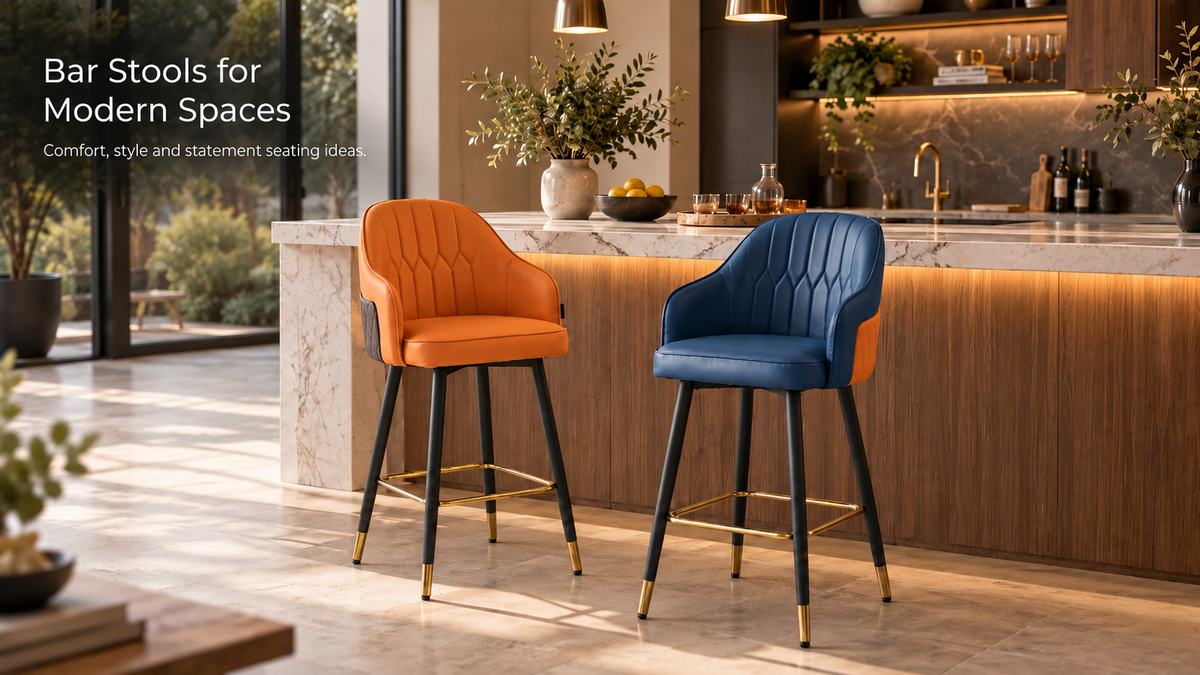
In most kitchens, the cabinets, counters, and lighting are planned to the inch. Seating is often decided in the last ten minutes before checkout, almost an afterthought after every major decision has been made. Bar stool chairs should be treated the same as anything else at the island because they are the piece a family really touches every single day, not just the piece that photographs well for a listing or a design blog.
What Makes Contemporary Bar Stools Work in Any Kitchen?
Bar stools are usually thought of as any metal, backless thing, but the actual definition is a little more specific than that. Clean frame, a seat shape that doesn't battle the lines of the counter, and a finish that reads current without chasing a trend that leaves in two years. That's the real test, whatever the showroom tag says. It's also why so many stools branded that way don't age well once the trend they were chasing has moved on.
Most buyers make the mistake of selecting a stool without measuring the counter overhang. A perfectly proportioned piece in a catalog photo can either feel crowded on a narrow island or leave an awkward gap under a deep one. And no amount of styling can fix a spacing problem after the fact. Measurement makes a subjective stylistic choice a trivially objective one.
Modern bar stools take that a step further, sacrificing warmth for a slightly cooler, more graphic silhouette that either photographs beautifully or feels sterile, depending on the rest of the room. Such stools are often welcome in a kitchen with clean lines and minimal hardware but pushed back against in a kitchen full of traditional detail. That's a compromise worth making before you lay out cash for modern bar stools for a kitchen that needs to feel warm for the next decade, not just hip for the next two years.

Why Bar Stool Chairs Still Anchor Every Kitchen Island!
It just takes a month for an island with not enough seats to turn into a staging ground for grocery bags and mail. Bar stool chairs are what make that surface a place where people sit and stand up less often to eat breakfast and have the conversations that used to happen at a dining table that nobody used enough. More than the choice of counter material or cabinet color, the choice of seating is the factor that most influences whether an island remains a useful feature after the new kitchen loses its novelty.
What Kitchen Counter Stools Get Right
Kitchen counter stools are built around one height range for a reason, since most kitchen counters worldwide sit within a few centimeters of each other. The height has to be right first. The rest of the choice, whether wood tone, upholstery, back, or no back, is a matter of taste, not a functional problem to be sorted later. The most common regret of buyers after living on the new island for a year is that they didn't skip that step.
Where Modern Counter Stools Fit Best
Modern counter stools tend to be slimmer than traditional stools, which matters more in a galley kitchen than a sprawling one. Four traditional stools can pack a narrow counter run in a way four slimmer versions simply do not, even with the exact same seat count. The difference rarely appears on a tape measure until the pieces are actually sitting next to each other in the room.
Kitchen Stools vs. Bar Height Bar Stools: What's the Real Difference?
The same buyers often shop for both categories, usually for the same kitchen, which is exactly why they get confused so often. The difference has nothing to do with looks and everything to do with the ledge each one is built to sit at.
Why Kitchen Stools Suit Lower Counters
These are built for a lower working height, the kind found at a standard counter rather than a raised bar ledge, and mixing the two up is the single most common mistake in this entire category. A stool bought for the wrong height either strands a diner's knees under the counter or leaves their elbows well above it, and neither is comfortable for more than one meal.
What Bar Height Bar Stools Add to a Home Bar
These exist for the taller ledges, the ones built closer to standing height for a home bar or a raised kitchen peninsula. The taller seat means a taller footrest too, usually built into the leg rather than added as an afterthought, since a piece without one leaves feet dangling for the entire meal.
Counter Height Chairs vs. Counter Height Stools: Not Quite the Same Thing
The categories are different, but the working height for both is the same, which is where the confusion starts. The two solve slightly different problems once a household actually starts using them daily rather than just picturing them in a showroom.
Choosing Counter Height Stools for an Island
They’re best when you’re close to an island that’s used quickly, such as for breakfast, a snack, or a laptop for 20 minutes, since the backless or low-back design makes it easy to slide in and out without hauling a heavy chair across the floor.
When Counter Height Chairs Make More Sense
These earn their place when a family actually lingers at the counter for a full meal. A decent backrest and, often, arms determine how long someone can be comfortable in that seat. That matters more than it sounds when dinner regularly happens at the counter and not at a separate table.
How to Choose Wooden Bar Chairs That Earn Their Keep
Wood is still the most trusted material by people for a kitchen seat, and there's a real reason for it beyond nostalgia. Wooden bar chairs don't die suddenly. They acquire character, which makes sense in a room that gets more wear and tear than just about anything else in the house. A scuff on a wooden frame reads as history. The same scuff on a painted metal frame usually just reads as damage.
Luxury bar stools made according to the same wood-and-metal logic, but with better joinery and a heavier base, bridge the gap between something that merely looks good and something that stays solid after years of being pulled out and pushed back in several times a day. That difference never shows in a showroom photo, only in the feel of the piece after eighteen months of real use.
Luxury bar stools are only premium when the details come to light that no one takes pictures of. The underside of a seat, the inside of a joint, and the weld that only an upholsterer sees. You will usually notice the difference the first time you put a lot of weight on a piece that looks just like a cheaper one.
Bar stools with backs are also more costly to build properly than backless ones, because the frame has to support a different kind of stress every time someone leans back in conversation. A poorly braced backrest becomes loose within a year. A well-built one barely moves after a decade.
A bar stool set of 2 makes sense for a small kitchen bump-out, but an island meant for a family of four deserves matching seating bought and finished together, since a mismatched pair added later rarely blends the way a showroom display suggests it will.
Bar chairs for kitchen use specifically should also survive a spill without staining permanently, since a kitchen counter sees more accidents in a year than any bar counter across the room from it. A sealed finish or a wipeable upholstery is worth the small premium over one that only looks right in dry, staged photographs.
Frequently Asked Questions
Q. What should be the average height of a standard kitchen counter?
Standard kitchen counters are generally 36 inches tall. At that height, NKBA planning guidelines recommend 24 inches of width and 15 inches of knee space for each seated person. A counter-height seat of about 24 to 26 inches leaves roughly 10 to 12 inches between the seat and the counter.
Q. Do I need armrests on my kitchen seating?
Armrests can prove useful for lengthy meals but can make it difficult to tuck a stool right under the counter, so check the depth available before you go for a wider, armed design.
Q. Is wood or metal better for everyday kitchen use?
Both hold up well when finished properly. Wood shows wear more gracefully over time, while metal resists scratches and spills with less maintenance day to day.
Q. Should every stool at the island match exactly?
Not necessarily. It seems intentional to match bar stool chairs to the model, but a common height and a shared family of color read the same way, even when individual shapes are a little different from seat to seat.
Q. How many stools does a standard island actually fit?
Plan for roughly 24 to 26 inches of width per person, which usually seats three to four comfortably along a typical kitchen island.
Conclusion
Get the height right first, then the frame, then the finish. That order matters more than any style trend. Most seating regrets come from a stool bought for the wrong counter or a frame that went wobbly within a year. Neither problem shows up in a product photo, so both need settling before you pay.
Bar stool chairs are used every day at the island. Choose them with the same care you gave the counter, and they'll still look intentional years from now, after countless breakfasts, homework sessions, and late conversations.
Planning an island or a home bar? ARGMAC designs seating and bar furniture around the space it's going into, not the other way round. Share your counter height and layout with our team, and we'll help you pick stools that fit the first time.
